

TABLE OF CONTENTS
- What a profit and loss statement actually shows
- What a cash flow statement actually shows
- The differences that clear up everything
- Why your business can be profitable and still run out of cash
- Positive cash flow and negative cash flow
- How to use both reports to make better decisions
- When to involve a small business accountant
A common issue businesses face is posting a profit but having limited cash in the bank account to fund day-to-day operations. This confusion usually comes down to cash flow vs. profit and loss (P&L). The cash flow statement and the profit and loss statement (also called an income statement) are both financial reports, but they cover different parts of your business’s financial health.
When used together, these tools help business owners make more informed financial decisions to remain profitable and maintain sufficient cash to cover expenses and pay bills.
What a profit and loss statement actually shows
A profit and loss statement covers your business’s financial performance over a defined period (month, quarter, year). Essentially, it’s a financial document that shows you whether you’re making or losing money.
A normal profit and loss statement will include things like:
- Sales revenue (your business’s revenue for that period).
- Cost of goods sold (COGS).
- Your gross profit (revenue minus goods sold).
- Operating expenses (rent, software, wages, insurance, marketing, etc.).
- Net income and net profit (or loss).
Importantly, an income statement records revenue and costs using different accounting methods — usually accrual accounting — which means revenue is recorded when it’s earned, not necessarily when cash received hits your account. That’s why the loss statement measures profitability, not your day-to-day ability to pay bills.
What a cash flow statement actually shows
Where the P&L focuses on profitability, a cash flow statement covers liquidity — your cash inflows and cash outflows, as well as the cash remaining at the end of the period.
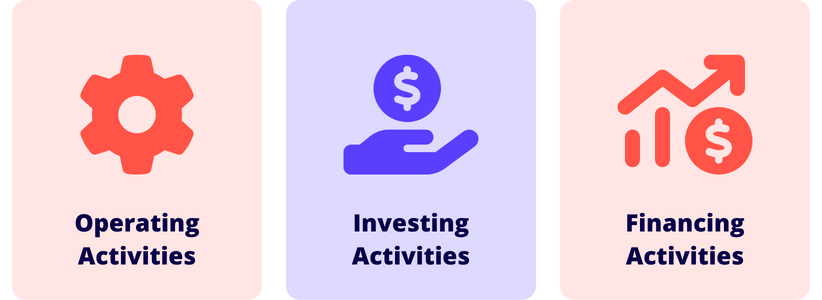
Most cash flow statements are split into:
- Operating activities: Cash generated from day-to-day business operations.
- Investing activities: Things like equipment purchases – i.e. capital expenditures.
- Financing activities: Loans, owner contributions, repayments.
An easy way to remember it is that the cash flow statement tells you whether you have sufficient cash to meet your obligations when they’re due, even if you’re technically profitable.
The differences that clear up everything
Here’s the easiest way to explain cash flow versus P&L:
- Timing: P&L shows revenue and costs when they’re earned or incurred, even if payments are delayed. Cash flow tracks cash paid and cash received.
- What’s included: Profit and loss includes non-cash items, while cash flow includes only what changes your cash position.
- Purpose: P&L shows financial performance and net profit margin. The cash flow statement shows your day-to-day cash flow position in real time.
- Best use: P&L helps you stay on top of profit margins, pricing, expanding revenue sources, etc., while cash flow helps you manage spending.
Why your business can be profitable and still run out of cash
While you can have strong gross profit and a healthy net profit, it is still possible to have negative cash flow. What could be going wrong?
1. You made sales, but you haven’t been paid yet
If you invoice customers on 14 or 30-day terms, your revenue might appear on the P&L now, but the cash won’t arrive until later. That gap sits in accounts receivable (the money customers owe you). Your P&L can look great while your cash position is rather tight.
2. You paid big bills upfront
Maybe you stocked up on materials or bought new inventory. Those are real cash outflows today. Depending on how your books treat stock, the expense might not hit the P&L immediately, but it can impact cash flow.
3. You invested in equipment
Buying a new laptop or vehicle is usually treated as a balance sheet item (an asset) instead of an immediate P&L cost. So while your profit might look just fine, your cash balance drops because of capital expenditures.
4. Loan money can ‘improve’ cash without improving profits
Your bank balance rises (good for cash flow), but it doesn’t increase your P&L profit. If a business owner drew on a loan or personal funds to keep going, you might see positive cash flow for a short while, even if the actual revenue received isn’t enough to cover ongoing costs.
Positive cash flow and negative cash flow
Positive cash flow means more cash came in than went out during the period. In everyday terms, positive cash flow means you generate enough cash to pay your bills and have a little breathing room.
Negative cash flow means you spent more than you brought in. It can happen for both good reasons (growth, stocking up, new equipment) and bad reasons (low sales, rising costs, poor collections). Long-term negative cash flow may indicate unsustainable business conditions or practices that require serious attention.
Many business owners look at free cash flow — the cash left after operating costs and necessary reinvestment — because it provides a clearer view of what the business can actually use for growth, debt reduction, dividends, and other priorities.
How to use both reports to make better decisions
You can use your profit and loss statement to:
- Track your business’s financial performance over a set period.
- Figure out whether pricing covers all of your costs incurred and operating expenses.
- Watch trends in sales revenue, profit, net profit margin, etc.
- Check whether your company’s business model is improving or slipping.
You can use your cash flow statement to:
- See how much cash is available and where it’s going.
- Spot upcoming moments (wages, GST, suppliers, and rent).
- Improve cash flow management by timing your spending and collections.
- See patterns of money flowing by seasonality, late payers, and slow months.
When to involve a small business accountant
If you’re making decisions about hiring, funding, pricing changes or potential expansion, it’s worth sitting down with a small business accountant who can walk you through your numbers.
Bookkeepers and accountants can also help with forecasting and strategic tax planning, so you’re never surprised by tax bills or timing problems.
When looking at both, think of P&L as ‘performance’ and cash flow as ‘survival’. P&L tells you if you’re building a profitable engine, and cash flow is the fuel that keeps you going.